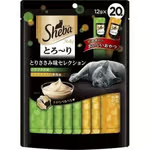
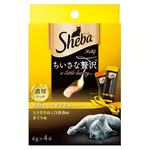
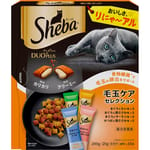
Sheba cat treats are available in various forms and flavors, offering supplementary rewards and sensory experiences for felines. These products commonly come as meat purees, sticks, pâtés, or small bite-sized pieces, primarily composed of meat or seafood, aiming to satisfy a cat's palate. Sheba cat treats can serve as an addition to a cat's daily diet, useful during training, comforting, or interactive play. Product packaging typically indicates ingredients, nutritional analysis, feeding guidelines, and storage instructions. When selecting Sheba cat treats, consideration can be given to a cat's preferences and requirements regarding texture and flavor. These treats are designed for palatability and usually do not offer complete and balanced nutrition, thus they should be given in moderation to avoid replacing staple meals. Some products might have specific functional claims, but their main purpose remains to provide a palatable treat. Consumers can refer to product labels for detailed information on Sheba cat treats, such as ingredient sources or preparation methods, to choose items that suit their needs.
Sheba cat treats represent a category of supplementary food items designed for felines, primarily characterized by their palatability and varied textures, intended to complement a cat's primary diet.
This article aims to describe the structural attributes and material composition of products within the Sheba cat treats category, without offering recommendations or comparing advantages of specific items.
Sheba Cat Treats: Classification by Formulation Type
The Sheba cat treats category is commonly divided based on its physical form and primary ingredients. One major classification distinguishes between wet and semi-moist formulations. Wet treats, often presented in sachets or small pouches, typically consist of finely shredded or pureed meat or fish suspended in a gravy or broth. These formulations are characterized by their high moisture content, which can exceed 70%. Semi-moist treats, on the other hand, possess a lower moisture content than wet formulations but are not fully dry. This intermediate moisture level contributes to a pliable texture. Another significant classification considers the primary protein source, such as chicken, tuna, bonito, or salmon, which dictates the flavor profile and nutritional contribution. Additionally, some Sheba cat treats are formulated as crunchy or chewy dry snacks, which are distinct from the wet or semi-moist varieties in their processing and texture, addressing various feline preferences.
Sheba Cat Treats: Material Composition and Processing
The material composition and processing techniques for Sheba cat treats vary significantly across different product lines. Wet Sheba cat treats, such as meat purees or shredded meat in gravy, primarily utilize animal proteins like chicken breast, tuna, or bonito as their main ingredient. These proteins are often processed through cooking methods such as steaming or boiling to ensure palatability and safety. The protein sources are then typically shredded, minced, or pureed to achieve specific textures. Gelling agents, such as carrageenan or guar gum, may be incorporated to create the desired consistency in gravies or mousses. Water is a substantial component, contributing to the high moisture content. Flavor enhancers and vitamins, such as Vitamin E, are frequently added to improve appeal and nutritional balance. The manufacturing process for these wet treats often involves thermal sterilization after packaging to ensure product stability and shelf life, which is a standard procedure for many Sheba wet cat food products. Dry Sheba cat treats, like crunchy kibble or biscuits, involve a different set of materials and processes. They typically combine ground animal proteins, cereals (such as corn or wheat, though some formulations may be grain-free), fats, and fibers. These ingredients are mixed, cooked, and then extruded into specific shapes before being dried to a low moisture content. Coatings of digest or fat are often applied post-drying to enhance palatability. The structural integrity of dry treats is maintained through the extrusion process, which gelatinizes starches and denatures proteins, forming a stable matrix.
Sheba Cat Treats: Environmental and Usage Context Variation
The properties of Sheba cat treats can exhibit variations depending on their intended usage environment and conditions. For instance, the high moisture content of Sheba wet cat treats makes them suitable for environments where additional hydration for felines is beneficial, such as arid climates or for cats that consume less water directly. The texture of pureed or shredded wet treats also makes them particularly accessible for cats with dental sensitivities or those in their senior years, where chewing harder foods might be challenging. Conversely, dry Sheba cat treats are more stable in ambient humidity and do not require refrigeration once opened, making them practical for short-term travel or as occasional rewards that can be left out for longer durations. The palatability of different Sheba cat treats may also be influenced by room temperature; wet treats are often perceived as more aromatic and appealing when served at slightly warmer temperatures, which can be achieved by allowing them to sit at room temperature for a period after refrigeration. The structural integrity of dry treats is generally maintained across a wider range of ambient temperatures, but prolonged exposure to high humidity can lead to softening or spoilage. The packaging of Sheba cat treats also reflects usage context; individually portioned sachets for wet treats minimize spoilage once opened, aligning with the typical feeding practices of serving fresh portions, while larger bags for dry treats are designed for resealing to maintain freshness over a longer period.
Sheba Cat Treats: Product Characteristics Based on Sales Ranking
This section presents the material, formulation, and structural characteristics of Sheba cat treats, strictly based on the provided sales ranking, without offering any usage recommendations.
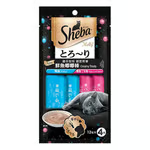
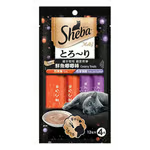
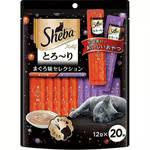
Rank 1: Sheba Cat Puree, Chicken and Chicken Whitefish, 12g 4-pack (SMT12) — This product is a wet cat treat formulated as a puree. Its primary protein sources are chicken and chicken whitefish, presented in a smooth, viscous texture. The individual portions are 12g, packaged in sachets, indicating a single-serving format. The moisture content is characteristic of a puree, designed for palatability and ease of consumption. The formulation typically includes water, various chicken and fish components, and thickening agents to achieve the specific consistency. The packaging is designed to maintain freshness for each individual serving.
Rank 2: Sheba Cat Puree, Bonito and Bonito Salmon, 12g 4-pack (10193745) — This item is also a wet cat treat presented in a puree form. The main protein ingredients are bonito and salmon, contributing to its distinct flavor profile. Each sachet contains 12g of the puree, and it is sold in a 4-pack. Similar to other puree formulations, it features a high moisture content and a smooth consistency, achieved through the processing of fish components and the addition of gelling agents. The product’s structure is homogenous, facilitating easy licking by felines.
Rank 3: Sheba Cat Puree, Tuna and Tuna Seafood, 12g 4-pack — This product is a wet cat treat with a puree texture. Its formulation centers around tuna and various other seafood components as primary protein sources. Each unit is a 12g sachet, sold as a 4-pack, providing individual servings. The consistency is smooth and moist, typical of a puree, and is achieved by finely processing the fish ingredients and incorporating moisture and stabilizers. The specific seafood blend contributes to its characteristic aroma and taste profile.
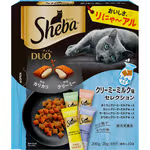
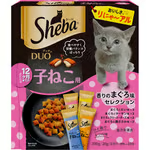
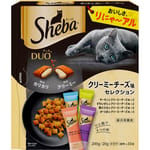
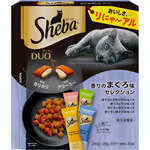
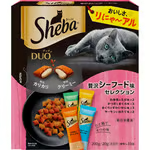
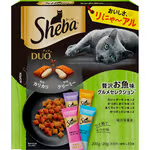
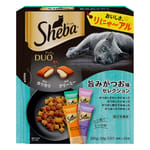
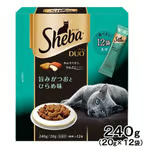
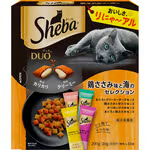
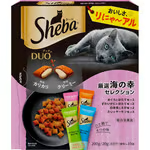
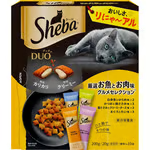
Rank 4: Sheba Duo Biscuits for Cats, Flatfish & Bonito, 240g (Blue Green) (SDU-20) (Discontinued) — This product was a dry cat treat, specifically in a biscuit form. Its formulation included flatfish and bonito as the key flavor components. The product was packaged in a 240g bag. As a dry biscuit, its structure would have been firm and crunchy, resulting from the extrusion and drying processes of its ingredients, which typically include ground proteins, grains, fats, and binders. The "Duo" likely refers to a dual-texture or dual-flavor characteristic, common in some dry cat treat formulations, such as a crunchy shell with a softer core.
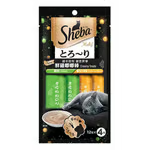
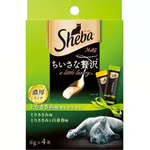
Rank 5: Sheba Luxurious Energy Snack, Chicken and Whitefish, 4-pack (Green) — This item is a semi-moist or wet cat treat, described as an "energy snack." The primary protein sources are chicken and whitefish. It is sold in a 4-pack, implying individual servings, though the specific weight per serving is not detailed. The term "snack" suggests it is intended as a supplementary item rather than a complete meal. Its formulation would involve a blend of animal proteins, moisture, and potentially fats and carbohydrates to provide energy. The texture would likely be soft or pliable, distinguishing it from dry kibble. The packaging format typically maintains the semi-moist or wet consistency.
Sheba Cat Treats: Quality Standards and Labeling Norms
The manufacturing and labeling of Sheba cat treats adhere to specific verifiable quality standards and documentation norms, ensuring product safety and appropriate consumer information. In many regions, pet food products, including Sheba cat treats, must comply with regulations set by authorities such as the Association of American Feed Control Officials (AAFCO) in the United States, the European Pet Food Industry Federation (FEDIAF) in Europe, or similar national bodies. These standards dictate minimum and maximum levels for nutrients, ingredient definitions, and accurate labeling practices. For instance, ingredient lists on Sheba cat treats are typically presented in descending order by weight, providing transparency regarding the primary components. Nutritional guarantees, often expressed as guaranteed analysis, specify the minimum percentages of crude protein and crude fat, and maximum percentages of crude fiber and moisture. These figures are verifiable through laboratory analysis. The labeling also includes product name, net weight, manufacturer’s name and address, and feeding guidelines, though the latter is primarily for complete diets rather than treats. Batch numbers and expiration dates are standard for traceability and quality control. Claims such as "natural" or "grain-free" are subject to specific definitions and verification processes, requiring manufacturers to substantiate them with documented evidence of ingredient sourcing and formulation. The design of packaging for Sheba cat treats also typically incorporates information on proper storage conditions, such as "store in a cool, dry place" or "refrigerate after opening," to ensure product integrity until consumption.
Sheba Cat Treats: Factual Insights on Formulation
One verifiable factual insight regarding Sheba cat treats, particularly the wet puree varieties, is their specific thixotropic properties. Thixotropy refers to the property of certain gels or fluids that are thick (viscous) under normal conditions but become more fluid (less viscous) when disturbed or agitated, and then return to their thicker state over time. In the context of Sheba cat purees, this property is often achieved through the careful balance of water content and specific hydrocolloid gelling agents, such as carrageenan or guar gum. This characteristic allows the puree to maintain its form within the sachet but then flow more easily when squeezed or licked by a cat, facilitating consumption while preventing spillage. The precise ratio of these gelling agents and moisture content is a critical aspect of their formulation, directly influencing the product's texture and ease of delivery.
Another factual insight concerns the use of specific palatants in the formulation of many Sheba cat treats. Palatants, often derived from animal digests, are substances added to pet food to enhance its aroma and taste, thereby increasing its appeal to animals. These are not primary nutritional components but rather flavor enhancers. For Sheba cat treats, particularly the dry or semi-moist varieties, the strategic application of these palatants, often in spray-dried or liquid form, onto the surface of the finished product is a common practice. This surface application ensures immediate sensory impact upon consumption. The chemical composition of these palatants is carefully controlled to be safe for feline consumption and to elicit a strong positive feeding response, which is a key characteristic of supplementary cat food products.
The category of Sheba cat treats encompasses a range of supplementary feline food items, distinguished by their material composition, structural attributes, and processing methods. The characteristics described are derived from verifiable product information and industry standards.
......View All