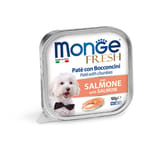
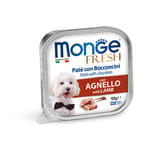
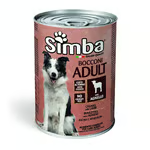
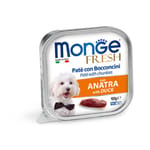
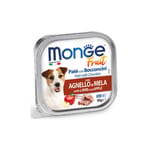
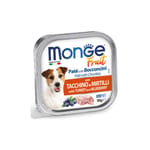
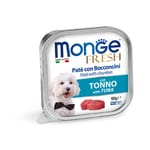
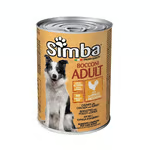
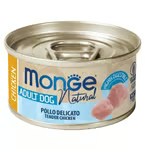
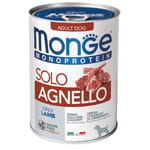
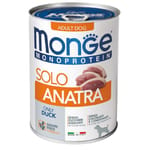
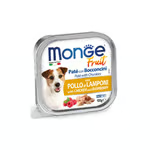
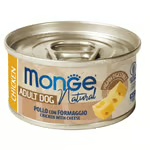
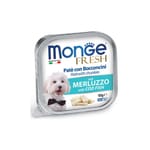
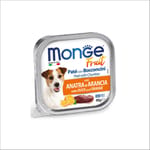
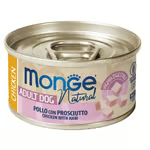
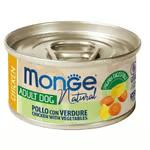
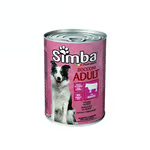
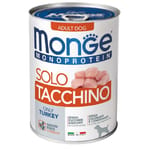
Monge dog wet food offers a variety of formulations designed as a supplement or a component of a dog's main diet. These products typically contain meat, vegetables, grains, and other nutritional elements, aiming to provide essential nutrients for canines. Monge dog wet food comes in diverse flavors and recipes, catering to dogs of different ages, sizes, or activity levels. The texture of these wet foods can range from chunks, pâté, or shredded meat, facilitating consumption for dogs. This type of canine food is packaged in sealed cans, which helps to maintain the freshness of the contents. In addition to Monge dog wet food, Monge also offers products like Monge cat wet food, addressing the dietary needs of various pets. Consumers can select based on their dog's specific requirements and preferences, ensuring a balanced nutritional intake. Some Monge wet food products also provide specialized formulas for particular health considerations. The ingredients of these canned foods are clearly labeled, allowing pet owners to understand their composition.
Monge dog wet food refers to a category of commercially prepared canine sustenance, typically presented in hermetically sealed containers, characterized by its elevated moisture content compared to dry kibble. This type of formulation serves as a dietary component for domestic dogs, offering a specific textural and nutritional profile. The production process involves various culinary and preservation techniques to ensure palatability and shelf stability.
This article aims to describe the structural attributes, material composition, and general usage context within the Monge dog wet food category. The information presented is intended to provide a verifiable, objective overview without engaging in product recommendations or comparative evaluations of specific offerings.
Classifications of Monge Dog Wet Food
The Monge dog wet food category is commonly divided based on several practical and compositional factors in supply contexts. One primary distinction arises from the container type, broadly separated into cans and trays or pouches. Canned Monge dog wet food typically involves larger volumes, often ranging from 400g to over 1kg, and is constructed from metal, requiring a can opener or featuring an easy-open pull tab. Tray or pouch formats, conversely, generally contain smaller, single-serving portions, commonly around 100g or 150g, and are often made from aluminum or multi-layered plastic films, designed for convenience and single-use applications. Another classification method centers on the primary protein source. Formulations frequently highlight a specific animal protein, such as chicken, beef, lamb, or fish, which constitutes a significant proportion of the recipe. This allows for differentiation based on canine dietary preferences or sensitivities. Furthermore, the presence or absence of specific ingredients, like fruits or vegetables, can further segment the Monge dog wet food market, indicating variations in nutritional profiles and palatability enhancers. Recipes might also be categorized by life stage suitability, though this is less common for wet food than for dry kibble, with some formulations implicitly or explicitly targeting adult dogs versus puppies. The textural presentation within Monge dog wet food also offers a classification axis, including paté, chunks in gravy, or shredded meat, each providing distinct masticatory experiences for the animal. These classifications collectively help to delineate the diverse offerings within Monge dog wet food products.
Material Composition and Processing Techniques in Monge Dog Wet Food
The material composition of Monge dog wet food involves a blend of animal-derived ingredients, plant-derived components, and various additives, all processed to achieve a specific nutritional balance and physical form. Animal proteins, such as muscle meat, organs, and animal by-products, form the foundational elements, providing essential amino acids and fats. These raw materials undergo strict quality control measures upon arrival at manufacturing facilities. The specific type of meat—be it beef, chicken, lamb, or turkey—dictates the primary flavor profile and contributes to the overall nutrient density. Alongside these proteins, fats from animal or plant sources are incorporated to provide concentrated energy and aid in the absorption of fat-soluble vitamins. Carbohydrate sources, often in the form of grains like rice or corn, or non-grain alternatives such as potatoes or peas, provide additional energy and fiber. Fiber is crucial for digestive health, contributing to regular bowel movements and supporting gut microbiota. Vegetables and fruits, when included, such as carrots, blueberries, or spinach, contribute vitamins, minerals, and antioxidants, enhancing the micronutrient profile of the Monge dog wet food. Water is a significant component, often comprising 70-85% of the total weight, which contributes to hydration and the characteristic moist texture. Beyond macronutrients, a precise blend of vitamins and minerals is added to ensure the Monge dog wet food meets the complete and balanced nutritional requirements established by regulatory bodies for canine diets. These micronutrients are essential for various physiological functions, including immune response, bone health, and metabolic processes. Processing techniques for Monge dog wet food generally involve several stages. Initially, raw ingredients are ground and mixed according to specific formulation recipes. This blending ensures a homogenous distribution of all components. Following mixing, the mixture is typically filled into cans, trays, or pouches. The containers are then hermetically sealed to prevent contamination. The most critical processing step is retort sterilization, where the sealed containers are subjected to high temperatures (typically 115-121°C) and pressure for a specific duration. This thermal processing effectively destroys pathogenic microorganisms and spoilage bacteria, rendering the product commercially sterile and providing an extended shelf life without refrigeration until opened. The exact temperature and duration depend on the product's pH, water activity, and container size, ensuring both microbial safety and nutrient retention. Some formulations may undergo different cooking methods prior to filling and sterilization, such as pre-cooking meats to enhance palatability or digestibility. The final product is then cooled, labeled, and packaged for distribution, ensuring the integrity and quality of the Monge dog wet food is maintained throughout its journey to the consumer.
Property Variations and Usage Environments for Monge Dog Wet Food
The properties of Monge dog wet food can exhibit variations across different formulations, which in turn influence their suitability for diverse usage environments or conditions. The moisture content, a defining characteristic of Monge dog wet food, is consistently high, typically ranging from 70% to 85%. This elevated moisture level inherently contributes to increased hydration for the animal, which is particularly beneficial in environments where water intake might be suboptimal or for dogs with specific urinary tract health considerations. The caloric density of Monge dog wet food can vary significantly. Formulations with higher fat content or denser protein sources will provide more calories per gram, making them suitable for active dogs, working dogs, or those requiring weight gain. Conversely, lower-calorie options might be appropriate for less active dogs or those on a weight management program. The texture of Monge dog wet food, whether it is a smooth pate, distinct chunks in gravy, or shredded meat, dictates the ease of consumption, especially for dogs with dental issues or those that prefer a specific mouthfeel. For instance, a pate might be favored by older dogs with missing teeth, while chunks could engage dogs that enjoy more substantial textures. The palatability, while subjective, is often a key consideration and is influenced by the ingredient profile and processing. Highly palatable Monge dog wet food can be particularly useful in encouraging eating for finicky dogs, those recovering from illness, or in situations where appetite is suppressed, such as during travel or stress. The digestibility of ingredients also plays a role; some formulations may use highly digestible proteins and carbohydrates, which can be beneficial for dogs with sensitive digestive systems or those requiring efficient nutrient absorption. The packaging format of Monge dog wet food also affects its usage environment. Smaller, single-serving trays or pouches are convenient for travel, portion control, or for owners who prefer not to store opened cans. Larger cans, while offering better value per serving, require refrigeration after opening and are typically used in a home setting for dogs with consistent feeding schedules. The specific nutrient balance, including the types and ratios of proteins, fats, carbohydrates, vitamins, and minerals, is tailored to meet the dietary requirements for maintenance of adult dogs. Some specialized Monge dog wet food might cater to specific conditions, though the general product lines focus on broad nutritional support. The shelf stability of sealed Monge dog wet food, due to its retort sterilization, means it can be stored at ambient temperatures for extended periods, making it a practical choice for emergency preparedness or situations where refrigeration is not consistently available. However, once opened, the product must be refrigerated and consumed within a limited timeframe, typically 2-3 days, to maintain freshness and prevent spoilage. These varying properties ensure that Monge dog wet food can be integrated into diverse feeding routines and environmental contexts, addressing a range of canine needs and owner preferences.
Monge Dog Wet Food Product Characteristics Based on Sales Ranking
The following descriptions detail the material, formulation, and structural characteristics of specific Monge dog wet food products, ordered by their reported sales ranking. This information is presented without evaluation or comparison, focusing solely on verifiable attributes.
Rank 1: Monge Simba Dog Wet Food Veal 415g (MO9010) — This Monge dog wet food is presented in a 415g metal can, indicative of a multi-serving format. The primary protein source is veal, which typically offers a lean protein profile. The formulation generally includes derivatives of meat and animal origin, alongside minerals and vitamins to ensure a complete nutritional profile. The texture is consistent with a minced or chunky presentation, designed to be palatable for adult dogs. The high moisture content is characteristic of wet food products, contributing to hydration. The production process involves retort sterilization, ensuring the product's commercial sterility and extended shelf life prior to opening. The ingredient list would specify the percentage of veal or veal derivatives, alongside other components like cereals, if present, or vegetable derivatives. This Monge dog wet food is formulated for the maintenance of adult dogs.
Rank 2: Monge Simba Dog Wet Food Chicken and Turkey 415g (MO9027) — This Monge dog wet food also comes in a 415g metal can, signifying a similar multi-serving application as the top-ranked product. The formulation features a combination of chicken and turkey as its primary animal protein sources. Both chicken and turkey are commonly utilized in canine diets due to their digestibility and lean protein content. The product's composition includes meat and animal derivatives, with specific proportions of chicken and turkey. Minerals and a vitamin complex are integrated to provide a balanced diet. The texture is typically a homogenous blend of minced meat and other ingredients, often suspended in a jelly or gravy, depending on the precise formulation. The moisture content is high, as expected for Monge dog wet food. This product is also subjected to thermal processing in its sealed container for preservation, ensuring microbial safety. It is intended for the daily feeding of adult dogs.
Rank 3: Monge Simba Dog Wet Food Lamb 415g (MO9164) — Contained within a 415g metal can, this Monge dog wet food is structured for multiple servings. The defining characteristic of this particular formulation is the use of lamb as the primary protein source. Lamb is often chosen for its distinct flavor profile and is sometimes favored for dogs with sensitivities to more common proteins like chicken or beef. The ingredient list details meat and animal derivatives, with lamb being a significant constituent. Additional components typically include vitamins and minerals to meet the nutritional requirements for adult dogs. The consistency is generally that of a pate or minced meat, designed for ease of consumption. Like other canned Monge dog wet food products, it possesses a high moisture content and undergoes retort sterilization for preservation, maintaining its quality until the can is opened. This formulation supports the general dietary needs of adult canines.
Rank 4: Monge Fresh Dog Tray Tuna 100g (MO3017) — This Monge dog wet food is packaged in a 100g tray, indicating a single-serving or smaller portion size, which differentiates it from the canned products. The primary protein source in this formulation is tuna, a fish-derived protein. Fish-based recipes often provide omega-3 fatty acids, which are beneficial for skin and coat health, although the specific levels would be detailed in the analytical constituents. The material composition includes fish and fish derivatives, with tuna as the highlighted component. Vegetable derivatives, minerals, and vitamins are also typically incorporated to complete the nutritional profile. The texture is often a smooth pate or finely minced consistency, suitable for a range of dogs. The smaller tray format offers convenience and reduces the need for refrigeration of leftovers. This Monge dog wet food is thermally processed in its sealed tray to ensure sterility and a prolonged shelf life at ambient temperatures. It is formulated for adult dogs.
Rank 5: Monge Fruits Dog Tray Turkey and Blueberry 100g (MO3208) — This Monge dog wet food is presented in a 100g tray, aligning with the single-serving or smaller portion format. The distinguishing feature of this particular recipe is the combination of turkey as the primary animal protein and blueberry as a fruit inclusion. Turkey provides a lean protein source, while blueberries are incorporated for their antioxidant properties and fiber content. The material composition includes meat and animal derivatives, specifically turkey, alongside fruits (blueberry). Minerals and vitamins are added to ensure a complete and balanced diet. The texture is generally a finely minced or pate consistency, allowing for easy consumption. The inclusion of fruit differentiates its flavor profile and adds a dimension to the micronutrient content. This Monge dog wet food, like other tray products, undergoes retort sterilization for preservation. It is designed to meet the nutritional requirements of adult dogs.
Quality Standards and Labeling Norms for Monge Dog Wet Food
The manufacturing and distribution of Monge dog wet food adhere to established quality standards and comply with specific labeling transparency norms, ensuring product safety and providing consumers with verifiable information. In Europe, where Monge products originate, compliance with regulations set forth by the European Pet Food Industry Federation (FEDIAF) is a benchmark. FEDIAF provides nutritional guidelines for complete and complementary pet foods, covering various life stages and physiological conditions. These guidelines dictate the minimum and maximum levels of essential nutrients, including proteins, fats, carbohydrates, vitamins, and minerals, that Monge dog wet food must contain to be considered nutritionally adequate. Manufacturers are required to conduct regular analytical testing of their products to verify adherence to these nutritional profiles. Furthermore, Good Manufacturing Practices (GMP) are rigorously applied throughout the production process. GMP encompasses a comprehensive set of regulations and guidelines ensuring that products are consistently produced and controlled according to quality standards. This includes stringent controls over raw material sourcing, facility hygiene, equipment calibration, personnel training, and batch record-keeping. Traceability is another critical aspect, meaning that every ingredient used in Monge dog wet food can be traced back to its origin, and every finished product can be tracked through the distribution chain. This provides a mechanism for accountability and recall if any issues arise. Labeling transparency for Monge dog wet food is mandated by regulatory bodies to provide clear and accurate information to the consumer. Key information required on product labels includes a guaranteed analysis, which states the minimum percentages of crude protein and crude fat, and the maximum percentages of crude fiber and moisture. This allows for a direct comparison of macronutrient content across different products. The ingredient list is another essential element, presented in descending order by weight, providing insight into the primary components of the Monge dog wet food. Specific ingredients, such as "meat and animal derivatives," may be further clarified by indicating the animal species if a claim is made (e.g., "with lamb"). The label also specifies whether the product is a "complete food" or a "complementary food." A complete food is formulated to provide all the necessary nutrients for a dog's daily diet, while a complementary food is intended to be fed alongside other foods and does not offer a standalone balanced diet. Feeding guidelines, typically expressed in grams per day based on the dog's weight, are also provided, although these are general recommendations. The net weight of the product, the manufacturer's identification, and a best-before date are also mandatory labeling requirements. These standards and norms collectively ensure that Monge dog wet food products are manufactured safely, are nutritionally appropriate, and are transparently represented to the consumer, allowing for informed choices based on verifiable data.
Factual Insights into Monge Dog Wet Food
The category of Monge dog wet food presents several verifiable factual insights related to its composition and manufacturing. One notable insight pertains to the role of the Maillard reaction in its production. While retort sterilization is primarily for microbial safety, the high temperatures involved can also induce a Maillard reaction between amino acids and reducing sugars present in the raw ingredients. This non-enzymatic browning reaction contributes to the development of complex flavor compounds and can subtly alter the color of the Monge dog wet food, enhancing its palatability without the addition of artificial flavorings. The extent of this reaction is carefully controlled during processing to achieve desired sensory attributes while minimizing the formation of undesirable compounds. The resulting flavor profile is a significant factor in canine acceptance of Monge dog wet food. Another factual insight relates to the water activity (aw) of Monge dog wet food. Despite its high moisture content (typically 70-85%), the water activity is carefully managed to inhibit microbial growth. Water activity is a measure of the unbound water available for microbial growth and chemical reactions, distinct from the total water content. For commercially sterile wet pet foods like Monge dog wet food, the retort process effectively reduces the microbial load to negligible levels, and the hermetic seal prevents recontamination. However, prior to sterilization, and particularly if a product is not fully sterile (e.g., some raw food diets, though not relevant to typical Monge dog wet food), controlling water activity through methods like salt addition or humectants would be crucial. For retorted products, the primary control for microbial stability post-processing is the destruction of microbes during sterilization and the prevention of recontamination through effective sealing of the container. This ensures that the product remains safe for consumption throughout its specified shelf life at ambient temperatures, provided the integrity of the packaging is maintained. The high moisture content also means that the overall nutrient density per unit weight is lower than dry kibble, necessitating larger feeding volumes to deliver equivalent caloric and nutrient intake. This characteristic is a fundamental aspect of Monge dog wet food and influences feeding recommendations.
Monge dog wet food represents a specific category of canine dietary products characterized by its moisture content, ingredient profiles, and processing methods. The information provided outlines the structural attributes, material composition, and general usage context without offering any form of product evaluation or recommendation. The details presented are based on verifiable, objective data pertaining to product formulation and industry standards.
......View All