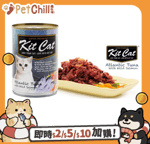
Kit Cat wet cat food falls under the category of feline wet food, typically presented in canned form. These products provide hydration and nutrition for cats, featuring diverse contents such as pate or soup-based textures to cater to various feline dietary preferences. The formulation of Kit Cat wet cat food primarily considers cats' daily nutritional requirements, offering a range of flavors and recipes. Products within this category are intended to serve as a main meal or supplementary food, providing a balanced dietary addition for cats. Consumers selecting these items often refer to the ingredients and formats of Kit Cat wet cat food to choose products that align with their cats' needs. This category also encompasses series like Kit Cat Complete Cuisine, enhancing product variety and offering pet owners more diverse options.
Kit Cat wet cat food, often presented in cans or pouches, constitutes a category of prepared feline dietary supplements or complete meals characterized by their high moisture content, distinct from dry kibble formulations.
This article aims to delineate the structural attributes, material compositions, and contextual applications within the category of Kit Cat wet cat food, focusing on objective characteristics rather than product advocacy or comparative evaluations.
Kit Cat Wet Cat Food: Classification by Formulation Type
The category of Kit Cat wet cat food is commonly divided based on its primary formulation type, which dictates both its physical presentation and its intended dietary role. One significant distinction is between complete and balanced formulas versus complementary or supplementary formulas. Complete and balanced wet cat food products are designed to meet all the nutritional requirements of a cat, as established by recognized veterinary nutritional guidelines, when fed as the sole diet. These formulations typically adhere to standards set by bodies such as the Association of American Feed Control Officials (AAFCO) or the European Pet Food Industry Federation (FEDIAF), ensuring they contain appropriate ratios of protein, fat, carbohydrates, vitamins, and minerals. Conversely, complementary or supplementary Kit Cat wet cat food items are intended to be fed alongside other food sources, such as dry kibble or other wet foods, and are not formulated to provide complete nutrition on their own. These often take the form of treats, toppers, or specialized dietary supplements. Another method of classification is by texture and consistency, differentiating between paté, shredded, flaked, or minced varieties, each offering a distinct mouthfeel and presentation. Furthermore, formulations can be classified by the presence or absence of specific ingredients, such as grain-free options which exclude cereals like wheat, corn, and rice, or those focused on single protein sources to address dietary sensitivities. The structural integrity of the food within the container, whether it maintains a solid form or is suspended in a liquid medium like gravy or aspic, also serves as a practical classification criterion for Kit Cat wet cat food.
Kit Cat Wet Cat Food: Material Composition and Processing Techniques
The material composition of Kit Cat wet cat food primarily revolves around animal-derived proteins, moisture, and a various array of supplementary ingredients. Protein sources frequently include chicken, beef, lamb, tuna, and salmon, which are selected for their nutritional density and palatability. These protein components are often present as muscle meat, organ meat, or derivatives thereof. The moisture content is a defining characteristic, typically ranging from 70% to 85%, which contributes to hydration support for felines. Carbohydrate sources, when present, may include starches from vegetables like peas or potatoes, or sometimes grains in non-grain-free formulations. Fats are incorporated from animal sources, such as chicken fat, or plant-based oils, providing essential fatty acids and energy. Vitamins and minerals are added to ensure nutritional completeness, often in the form of vitamin premixes and chelated minerals for improved bioavailability. Gelling agents, such as carrageenan, guar gum, or agar-agar, are frequently used to create specific textures like aspics or gravies, influencing the structural form of the Kit Cat wet cat food. The processing techniques involved in manufacturing wet cat food typically begin with the preparation and grinding of raw ingredients. These ingredients are then mixed according to precise formulations. The mixture is filled into cans or pouches, which are then hermetically sealed. Subsequently, the sealed containers undergo a sterilization process, usually through high-temperature, high-pressure retort cooking. This thermal processing serves to destroy pathogenic microorganisms and enzymes, ensuring product safety and extending shelf life. The specific cooking parameters, including temperature and duration, are carefully controlled to achieve commercial sterility while minimizing nutrient degradation. Variations in processing can lead to different textures; for example, a longer cooking time or finer grinding can result in a smoother paté, while minimal processing of whole meat pieces yields a flaked or shredded texture within the Kit Cat wet cat food product.
Kit Cat Wet Cat Food: Contextual Properties and Usage Environments
The properties of Kit Cat wet cat food can vary significantly depending on the intended usage environment and specific dietary requirements. For instance, in environments where cats may have reduced access to fresh water, the high moisture content of wet food becomes a critical property, contributing to overall hydration. This is particularly relevant for indoor cats or those with certain urinary tract health considerations. The palatability of different formulations also influences their usage context; some cats exhibit strong preferences for specific textures, such as paté versus shredded forms, or particular protein sources. This necessitates a variety of options within the Kit Cat wet cat food range to accommodate individual feline preferences. For cats with specific health conditions, specialized formulations of Kit Cat wet cat food are developed. Examples include formulas designed for weight management, which typically have lower caloric densities, or those targeting digestive sensitivities, often featuring novel protein sources or easily digestible ingredients. The physical form of the food, whether it is a soft paté or contains distinct meat pieces, can also be a factor in usage, especially for elderly cats or those with dental issues who may struggle with harder textures. The container type, such as cans or pouches, affects storage and serving convenience, influencing the practical application of Kit Cat wet cat food in various household settings. Portion control is another property influenced by usage context; single-serving pouches or smaller cans are often preferred for convenience and to prevent spoilage, particularly in multi-cat households or for cats with strict dietary regimens. Furthermore, the presence or absence of specific allergens, such as grains or common protein sources, determines suitability for cats with food sensitivities or allergies, thereby defining a specific usage environment for particular Kit Cat wet cat food products.
Kit Cat Wet Cat Food: Product Characteristics from Sales Ranking
The following descriptions detail the material, formulation, and structural characteristics of specific Kit Cat wet cat food products based on their sales ranking, without offering recommendations or comparisons.
Rank 1: Kit Cat Aspic Grain-Free Wet Cat Food Chicken 80g (KC-2201) — This product is characterized by its primary protein source, chicken, presented within an aspic matrix. Aspic is a savory jelly made from meat stock or broth, often solidified using gelling agents. The formulation is designated as grain-free, indicating the absence of cereal grains such as wheat, corn, or rice. The product is packaged in an 80-gram unit, suggesting a single-serving or supplemental portion size. The texture is defined by the solid yet yielding nature of the aspic surrounding the chicken components.
Rank 2: Kit Cat Grain-Free Wet Cat Food Chicken + Beef 80g (KC-2218) — This Kit Cat wet cat food variant features a combination of two primary protein sources: chicken and beef. Like the top-ranked product, it is formulated as grain-free, which means it does not contain common cereal grains. The product is presented in an aspic base, contributing to its high moisture content and distinct texture. The 80-gram packaging size is consistent with other products in this line, typically indicating a single meal or a dietary supplement. The dual protein profile offers a different flavor and nutrient composition compared to single-protein formulations.
Rank 3: Kit Cat Grain-Free Wet Cat Food Chicken + Lamb 80g (KC-2225) — This Kit Cat wet cat food combines chicken and lamb as its primary protein ingredients. It adheres to a grain-free formulation principle, excluding cereal grains. The texture is achieved through an aspic preparation, which encases the meat components in a gelatinous matrix. This structural form aids in moisture retention and provides a specific mouthfeel. The product is provided in an 80-gram unit, designed for individual servings or as a dietary addition. The inclusion of lamb offers a distinct protein and fat profile.
Rank 4: Kit Cat Grain-Free Wet Cat Food Chicken + Shrimp 80g (KC-2232) — This formulation of Kit Cat wet cat food includes chicken and shrimp as its main protein sources. It is developed as a grain-free product, omitting ingredients such as wheat, corn, and rice. The ingredients are suspended within an aspic base, which provides a cohesive structure and high moisture content. The 80-gram packaging is a standard portion size for this line. The combination of poultry and seafood proteins offers a unique palatability profile.
Rank 5: Kit Cat Grain-Free Wet Cat Food Tuna + Scallop 80g (KC-2249) — This Kit Cat wet cat food product features tuna and scallop as its primary protein components, representing a seafood-focused formulation. It is explicitly labeled as grain-free, indicating the absence of common cereal grains. The ingredients are set in an aspic, which contributes to the product's moisture content and characteristic jelly-like texture. The 80-gram unit size is consistent with the other ranked products, facilitating portion control. The inclusion of scallop alongside tuna provides a distinct marine protein combination.
Kit Cat Wet Cat Food: Quality Standards and Labeling Norms
Verifiable quality standards and transparent labeling norms are fundamental to the Kit Cat wet cat food category, ensuring consistent product attributes and consumer information. In many regions, the production of wet cat food is subject to regulatory oversight by governmental bodies or industry associations. These regulations typically cover aspects such as ingredient sourcing, manufacturing hygiene, nutritional adequacy, and labeling requirements. For instance, in the United States, the Association of American Feed Control Officials (AAFCO) sets guidelines for pet food labeling and nutritional claims, which many manufacturers voluntarily adopt. AAFCO statements, such as "complete and balanced for all life stages" or "for intermittent or supplemental feeding only," provide critical information regarding the product's nutritional completeness. Similarly, in Europe, the European Pet Food Industry Federation (FEDIAF) publishes nutritional guidelines and codes of practice for pet food production. Labeling transparency for Kit Cat wet cat food typically includes a guaranteed analysis, which specifies the minimum percentages of crude protein and crude fat, and maximum percentages of crude fiber and moisture. An ingredient list, ordered by weight, is also a standard requirement, allowing consumers to identify the components of the food. Information regarding caloric content, often expressed as metabolizable energy (ME), may also be provided. Claims such as "grain-free" or "natural" often necessitate adherence to specific definitions or criteria established by regulatory bodies or industry standards. Manufacturing facilities often adhere to Good Manufacturing Practices (GMPs), which are a set of guidelines for ensuring product quality and safety during production. Compliance with these standards and the provision of clear, standardized labeling on Kit Cat wet cat food packaging allows for informed evaluation of the product's composition and intended dietary role.
Kit Cat Wet Cat Food: Factual Insights on Composition
A verifiable factual insight concerning Kit Cat wet cat food, and wet cat food in general, relates to the caloric density relative to dry cat food. Due to its significantly higher moisture content, wet cat food typically possesses a lower caloric density per unit of weight compared to dry kibble. For example, a 100-gram serving of wet cat food might contain approximately 80-120 kilocalories, whereas an equivalent weight of dry cat food could contain 350-400 kilocalories. This difference is primarily attributable to the water content, which adds weight but no caloric value. Consequently, a cat consuming only wet food may need to consume a larger volume of food by weight to meet its daily caloric requirements than a cat fed dry kibble, even if the dry food has a higher protein concentration. Another verifiable insight pertains to the protein content on a dry matter basis. While the 'as fed' protein percentage on a Kit Cat wet cat food label might appear lower than that of a dry food, calculating the protein content on a dry matter basis (by subtracting the moisture percentage) often reveals a comparable or even higher protein concentration in wet foods. For instance, a wet food with 10% protein and 80% moisture has a dry matter protein content of 50% (10% / (100% - 80%)). This calculation provides a more accurate comparison of nutrient concentrations between wet and dry formulations of Kit Cat wet cat food.
This exposition has detailed the classifications, compositional elements, processing methodologies, and contextual attributes pertinent to Kit Cat wet cat food, alongside relevant quality standards and factual insights, without offering any form of endorsement or comparative analysis.
......View All